What Is Fast Charging?
Fast charging refers to any charging technology that delivers power faster than the standard 5W (5V/1A) charger that used to come with phones. Modern fast charging can deliver 18W, 30W, 65W, or more, cutting charge times from hours to minutes.
The Main Fast Charging Standards
USB Power Delivery (PD)
USB Power Delivery is the most widely adopted fast charging standard. It is used by Apple, Google, Samsung, and most Android manufacturers. PD negotiates the optimal voltage and current between charger and device, supporting power levels from 5W up to 240W.
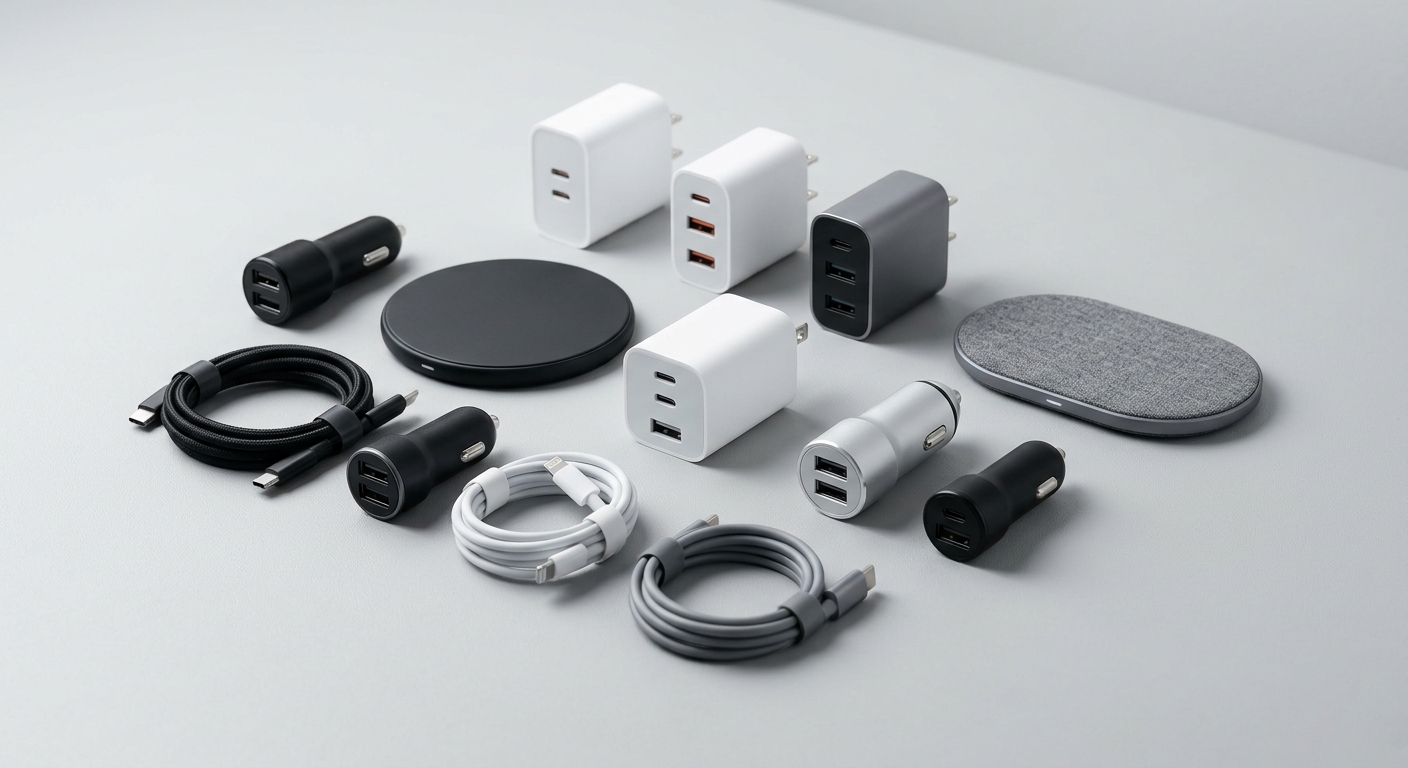
PD is the standard you should look for when buying a charger. Our 65W GaN PD Wall Charger supports Power Delivery and works with iPhones, Android phones, tablets, and laptops.
Qualcomm Quick Charge (QC)
Quick Charge is Qualcomm's proprietary fast charging standard, found primarily in phones with Qualcomm Snapdragon processors. QC 4+ and QC 5 are compatible with USB PD, meaning a PD charger will fast-charge a QC-compatible phone.
Proprietary Standards
Some manufacturers use proprietary charging protocols. While these can deliver very high speeds with matching chargers, they often fall back to standard PD speeds when used with third-party chargers. For universal compatibility, stick with PD chargers.
How Wattage Affects Charging Speed
Higher wattage means more power delivered per second, resulting in faster charging. Here is a rough guide:
- 5W: Standard charging, 3-4 hours for a full charge
- 18W: Basic fast charging, about 50% in 30 minutes
- 30W: Fast charging for most phones, 50% in 20-25 minutes
- 65W: Ultra-fast charging, 50% in 15 minutes, full charge in under an hour
Note that phones typically charge fastest in the 0-50% range, then slow down for the remaining 50% to protect battery health.
Does Fast Charging Damage Battery Life?
This is a common concern. The short answer: modern fast charging is designed to be safe for your battery. Phones and chargers communicate to manage power delivery, and phones reduce charging speed as the battery fills up. Heat is the main factor that affects battery longevity, and GaN chargers run cooler than older silicon chargers.
To maximize battery lifespan, avoid letting your phone get extremely hot while charging and try to keep it between 20% and 80% charge when possible.
Choosing a Fast Charger
When shopping for a fast charger, check three things:
- Wattage: Match or exceed your phone's maximum charging speed
- Protocol: USB Power Delivery is the most universal standard
- Connector: USB-C to USB-C for modern phones, USB-C to Lightning for iPhones
For cables, make sure your cable supports the power level you are using. A standard USB-C cable may only support 60W, while higher-quality cables support 100W or more. Our 100W USB-C to USB-C Cable supports full 100W power delivery with durable braided nylon construction.
Explore our full range of fast chargers and cables in the Chargers & Power collection and the Cables & Adapters collection.